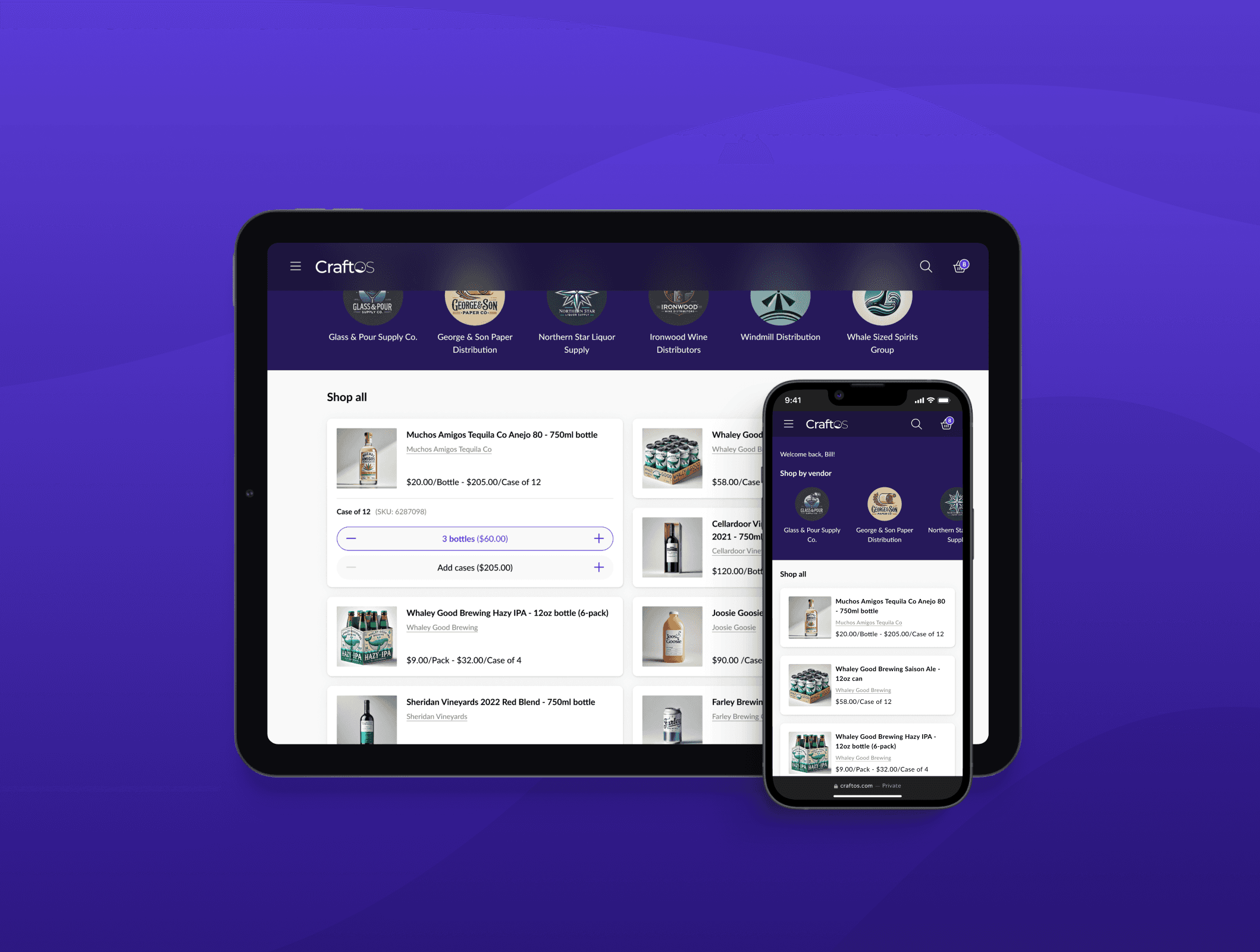
Overview
The beverage and bar supply industry has long relied on manual processes, fragmented systems, and time-intensive sales efforts. A multivendor wholesale marketplace modernizes this workflow by giving vendors and buyers a single, streamlined platform to manage catalogs, inventory, and orders.
Here’s how it works—and why it matters for both sides of the marketplace.
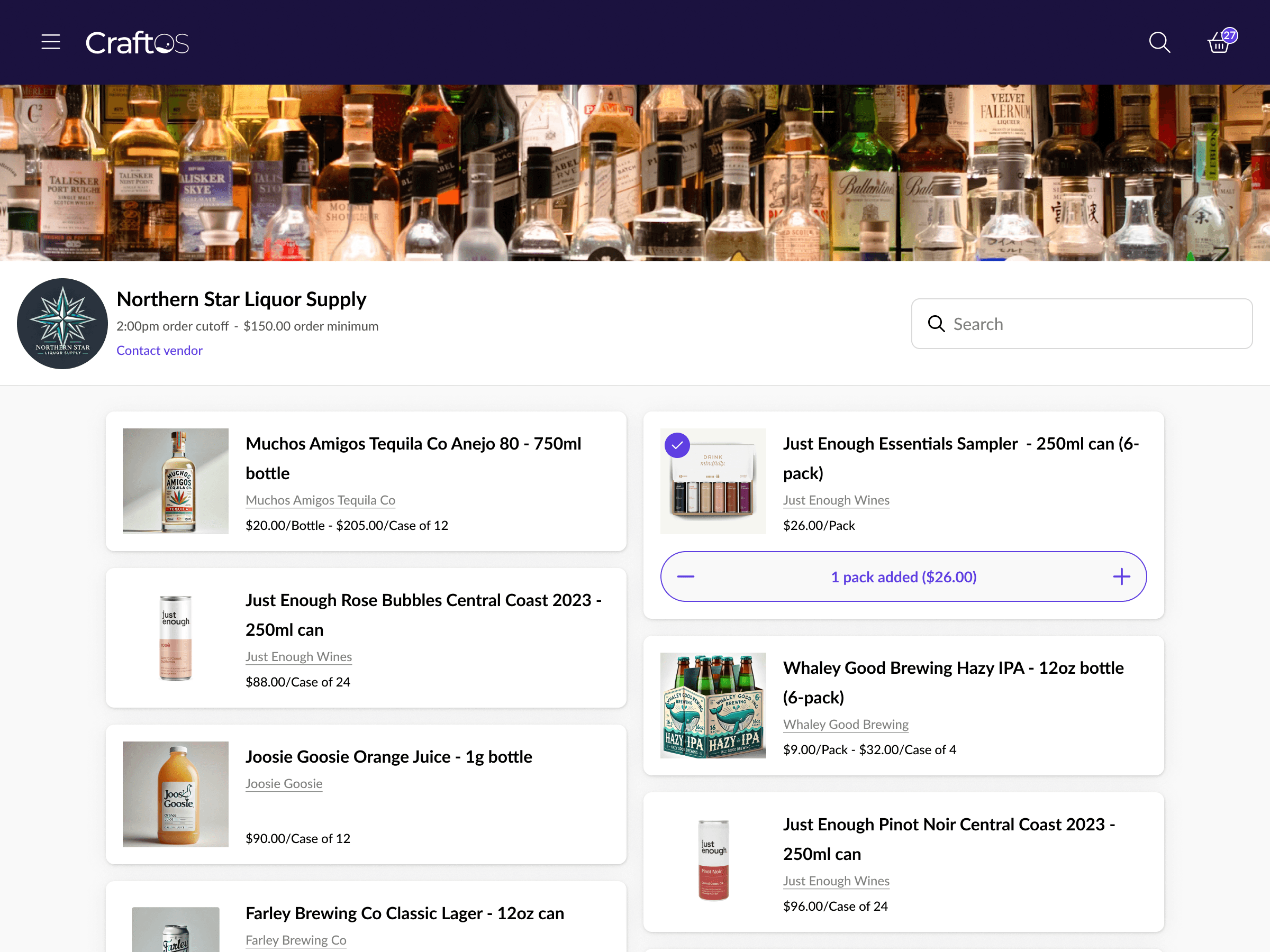
Helping Vendors Reach More Buyers with Less Effort
Customer acquisition in this industry often depends on sales reps driving location to location to pitch products and take orders. That approach is slow and hard to scale.
A multivendor marketplace allows vendors to:
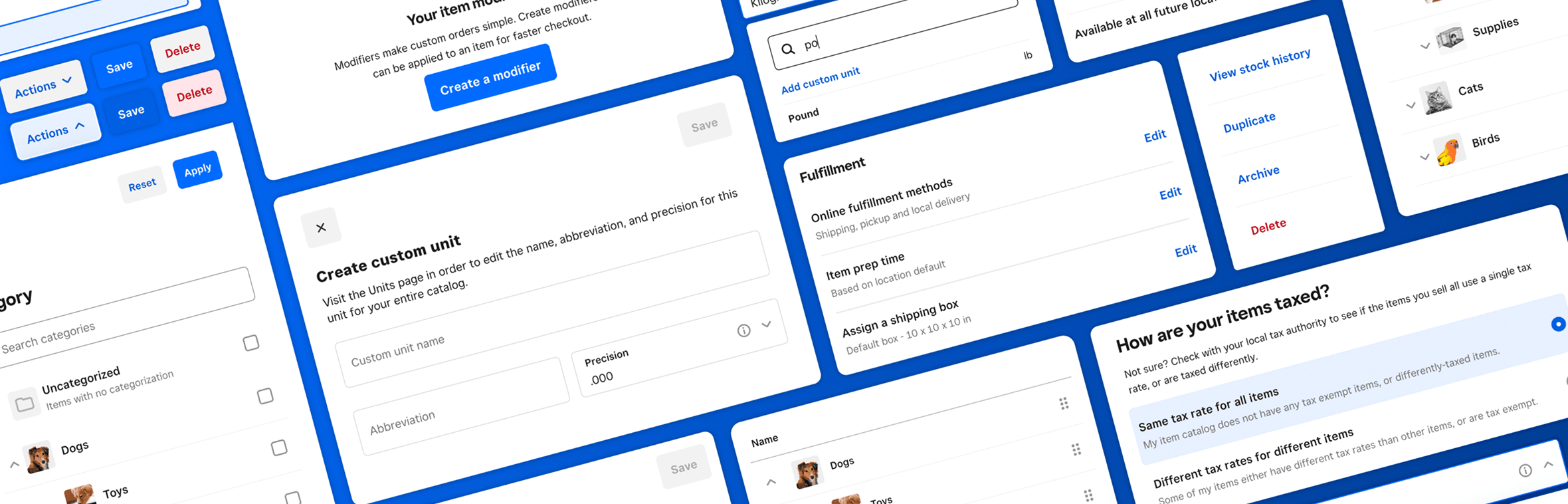
Publish digital catalogs and live inventory
Get discovered by new local buyers
Automatically generate purchase orders
Reduce manual admin for sales reps
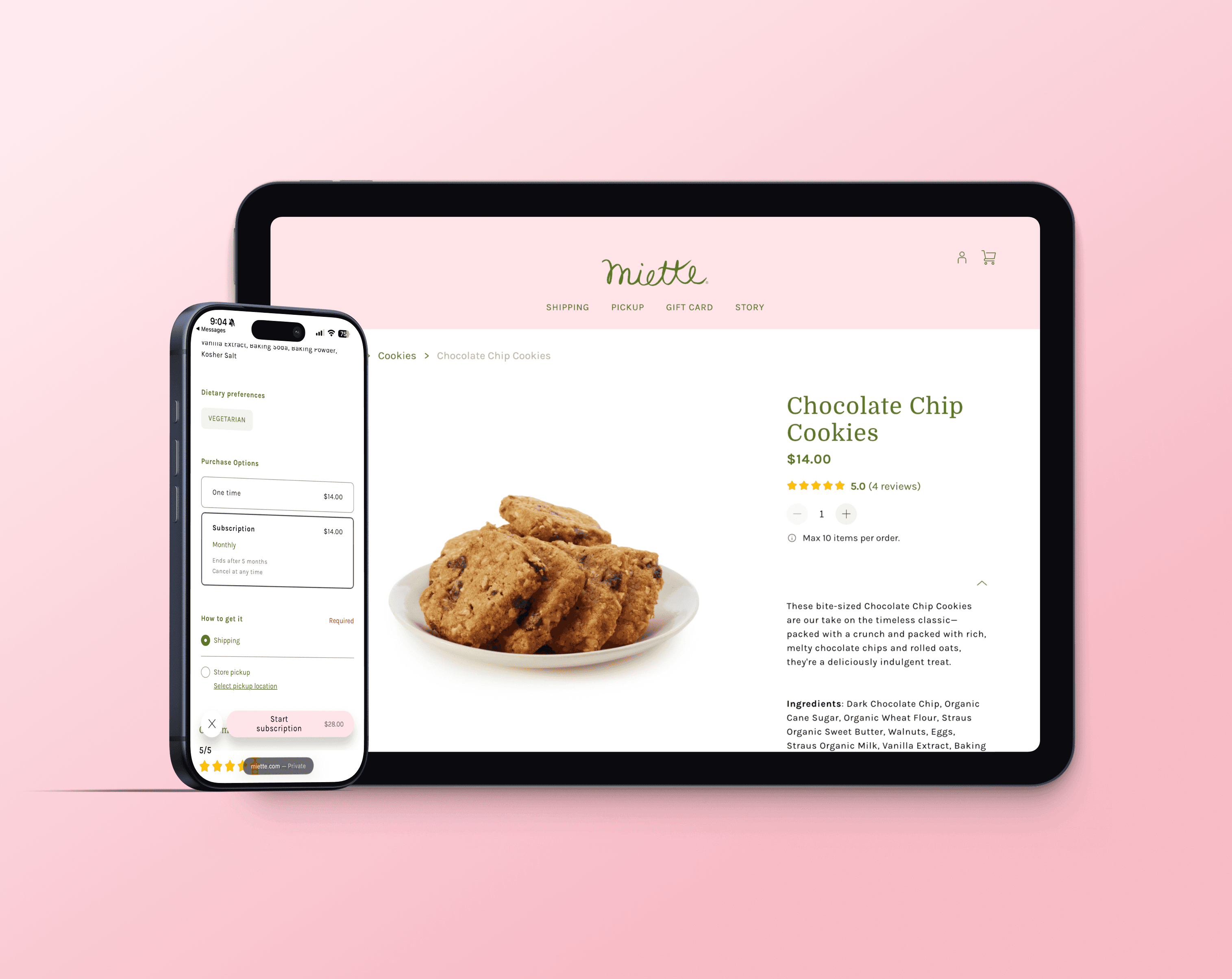
Vendors can also create branded pages to share directly with customers while still benefiting from marketplace discovery. This expands reach without increasing workload.
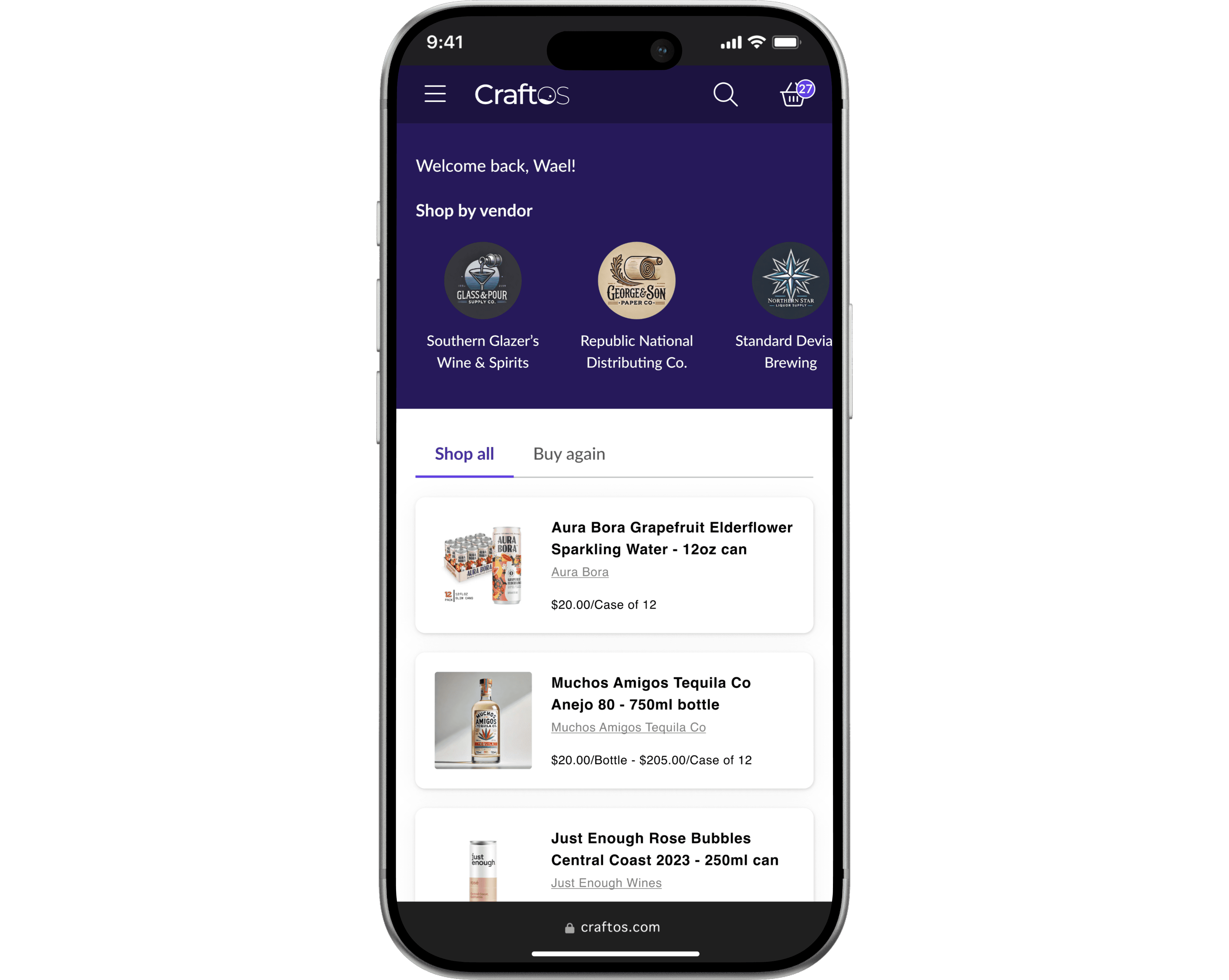
One Place for Buyers to Order Everything
For bars, restaurants, and bottle shops, ordering wholesale usually means juggling multiple logins and systems. Many teams still walk their space with pen and paper, then place separate orders vendor by vendor.
With a unified marketplace, buyers can:
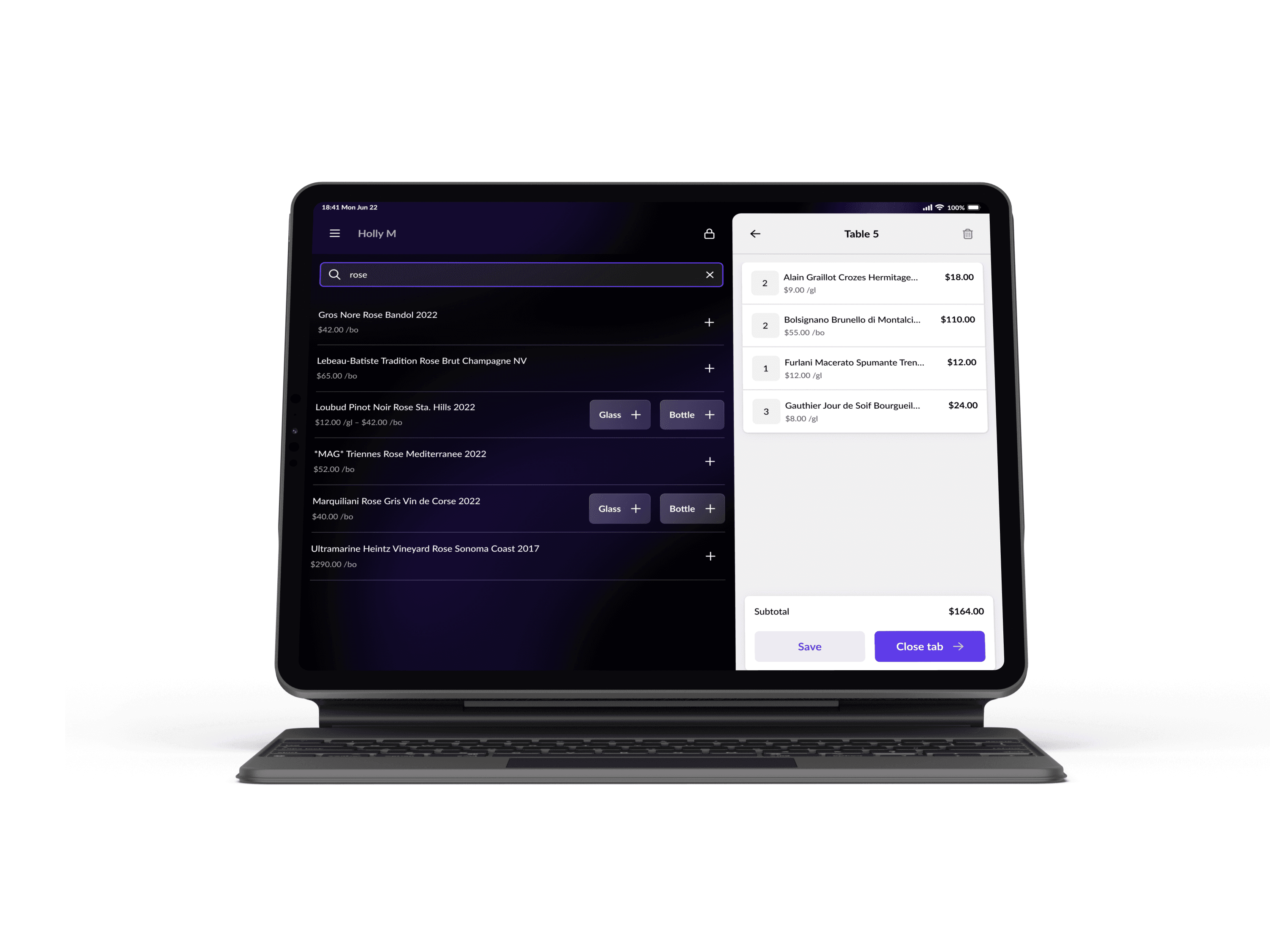
Search products across vendors
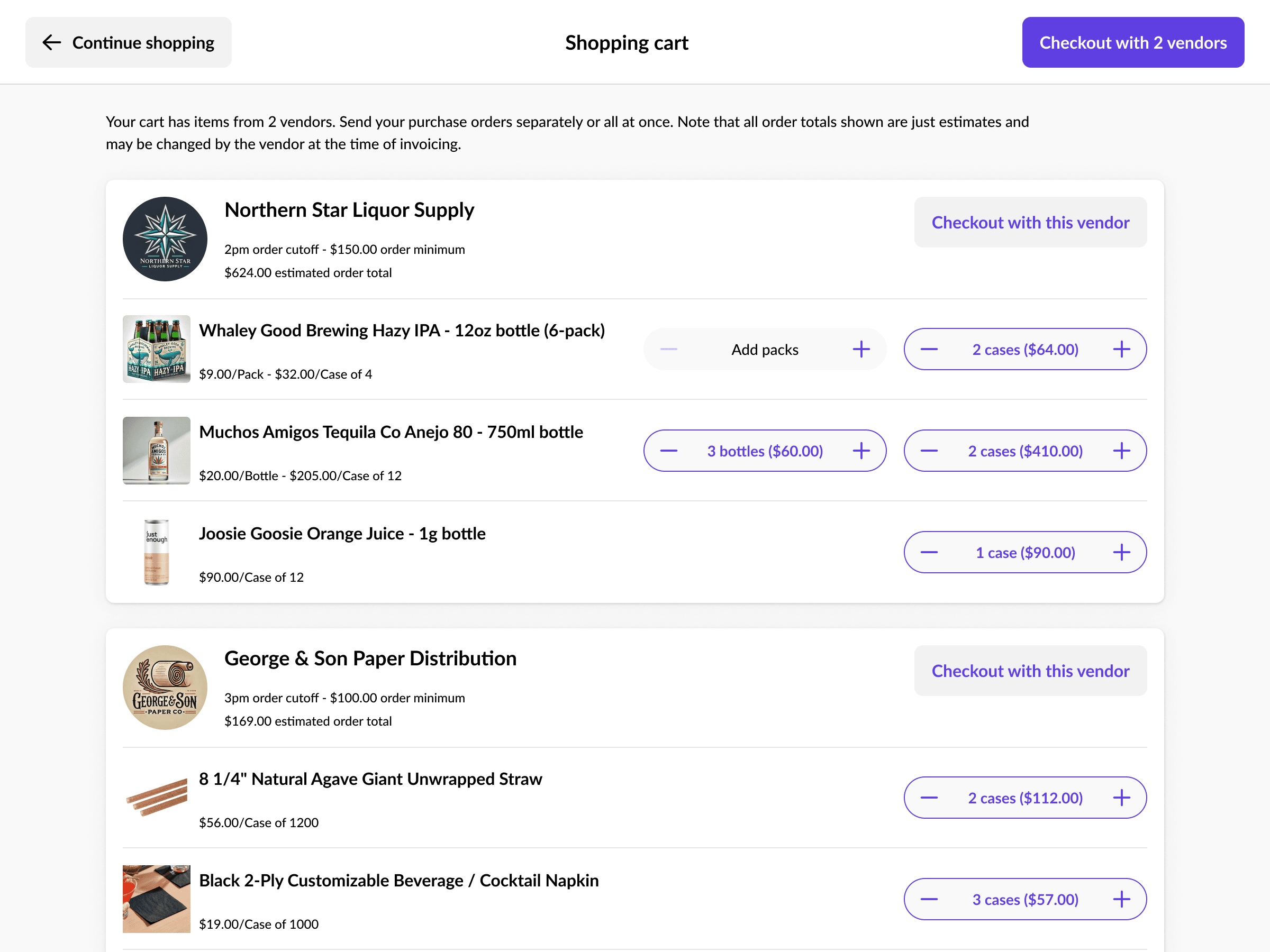
Add items to a universal cart
Order from a phone or tablet while checking inventory on-site
This replaces scattered workflows with a simple, ecommerce-like experience.
Fewer Steps, Faster Purchase Orders
Traditionally, each vendor requires its own purchase order, creating repetitive work for buyers.
A multivendor system lets buyers:
Add items from multiple vendors to one cart
Automatically split orders by vendor at checkout
Send multiple POs in a single action
This saves time and reduces errors, especially for businesses managing many suppliers.