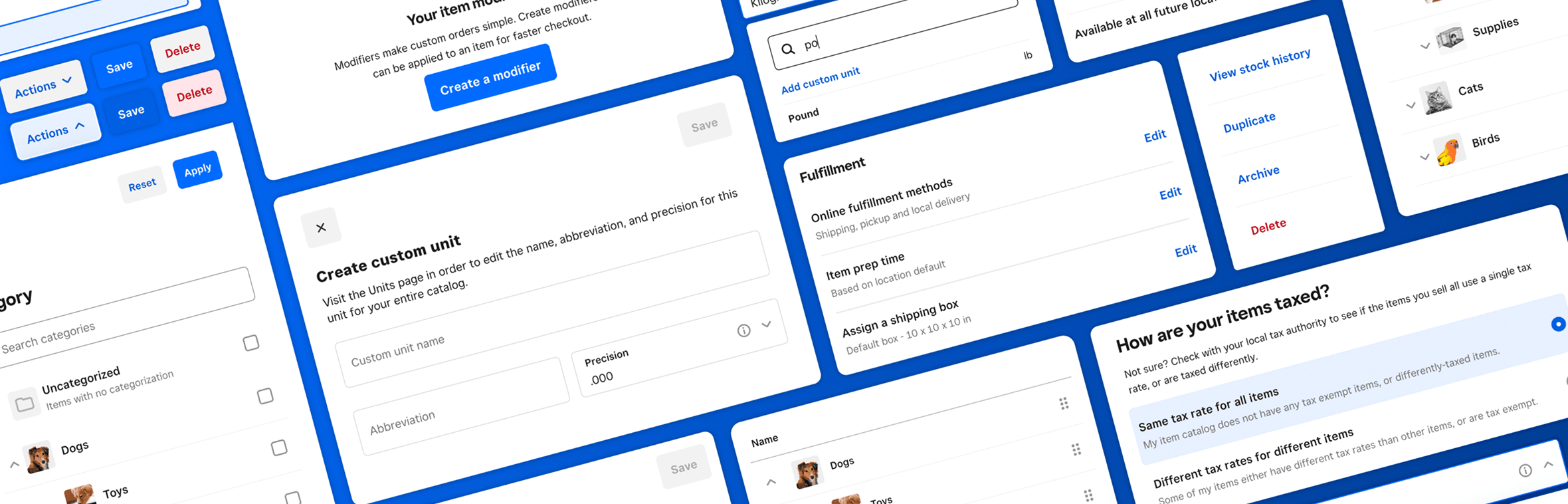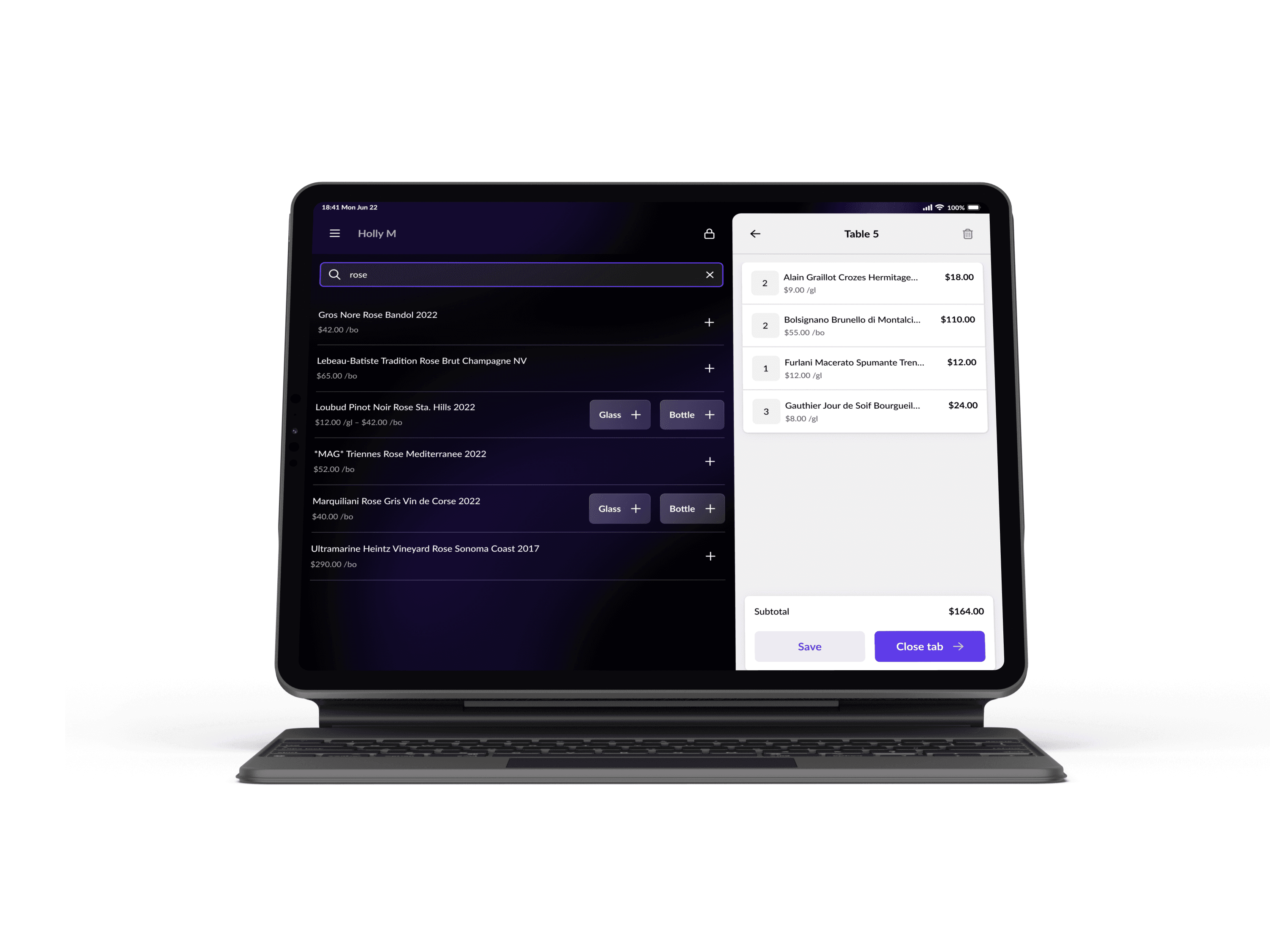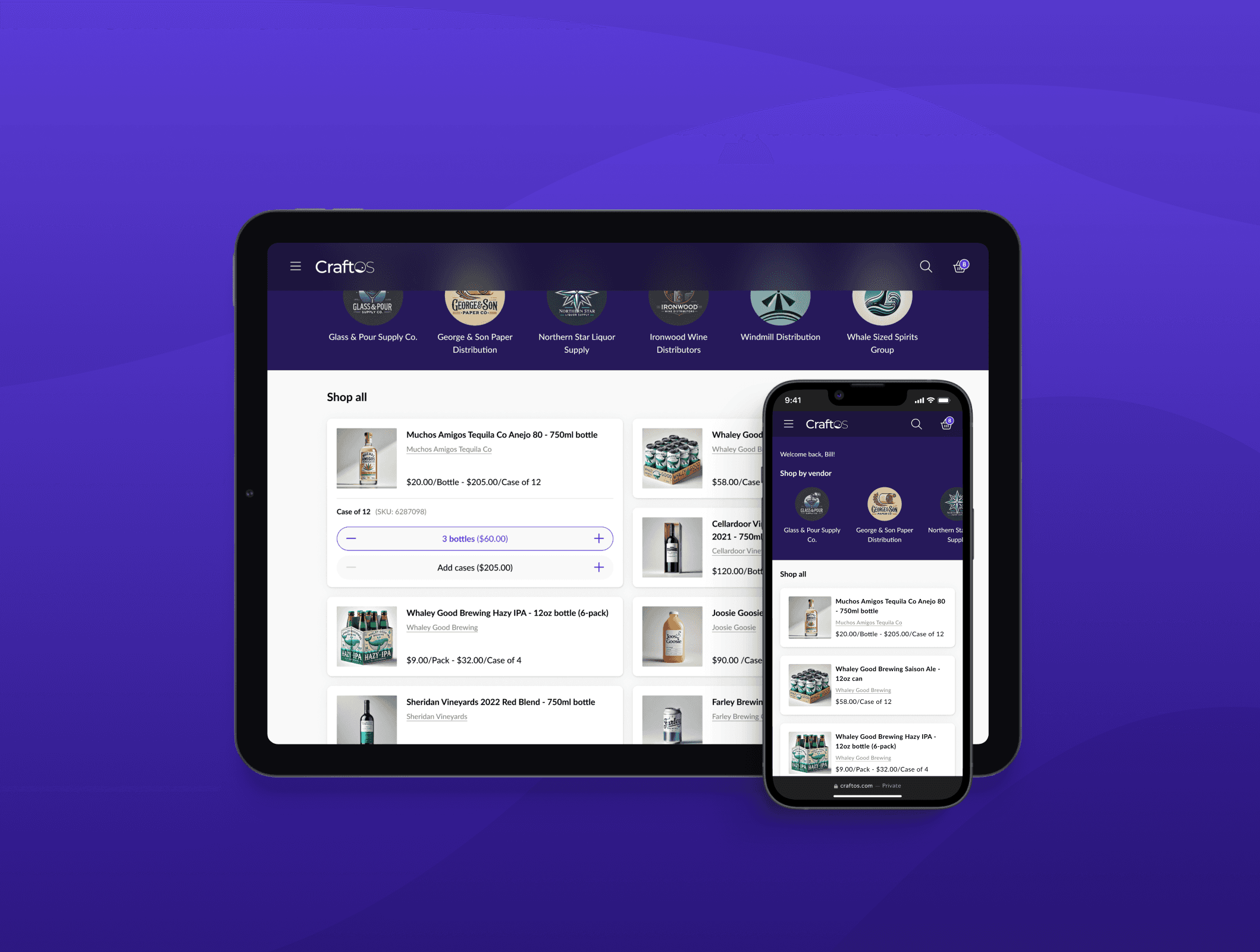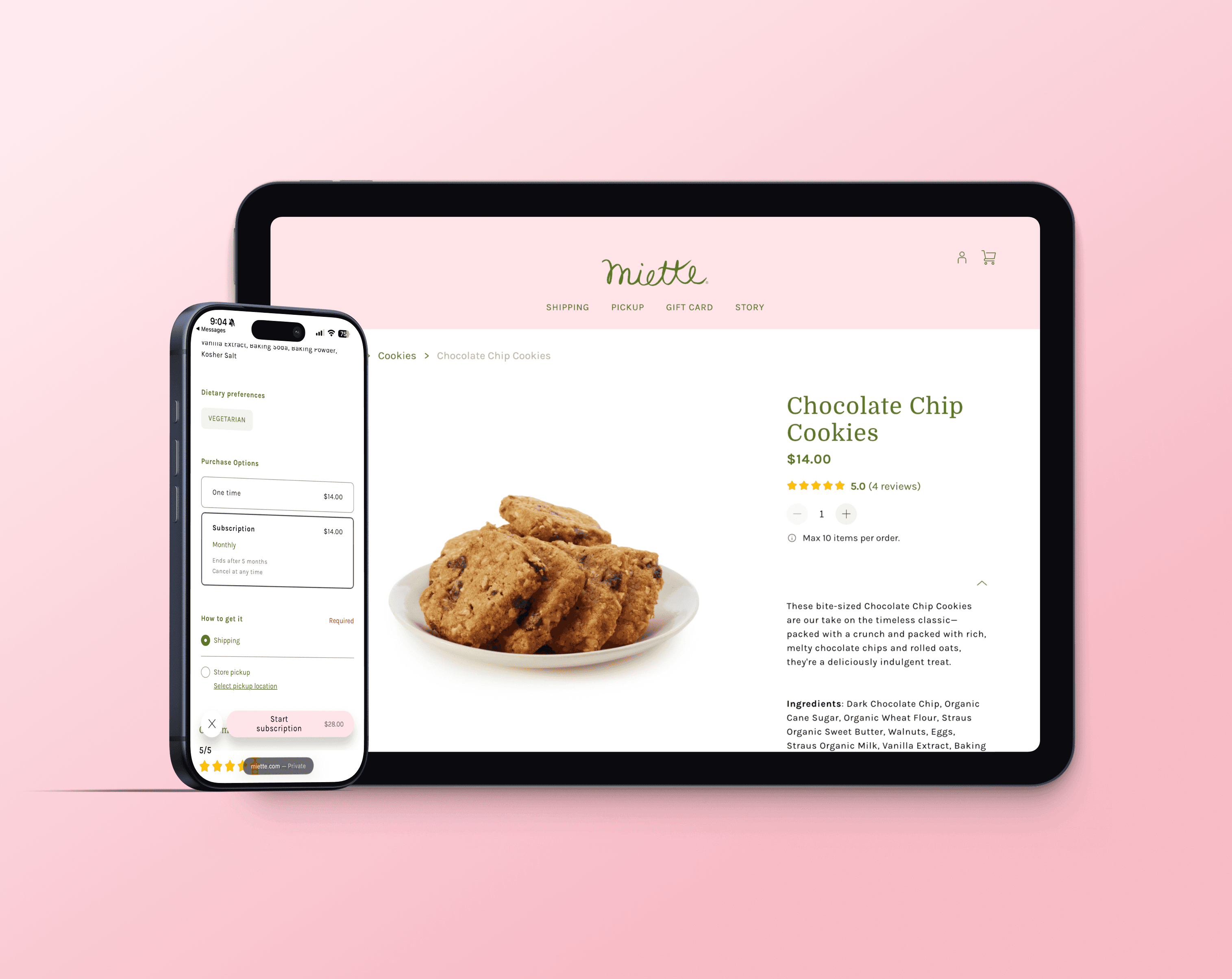
Overview and initial challenge
Square’s users had been asking for a way to gain more revenue through recurring purchases but the only way to do that was to create a recurring invoice. This was an issue because it didn’t support other sales channels like online stores, kiosks, and POS. The initial approach that was pitched posed challenges in terms of scalability, user experience, and cross-platform integration. When I recognized the potential issues, I became more involved and helped the teams to design the “Subscriptions” model that Square currently uses across multiple sales channels.
Discovery & Findings
Upon attending a design presentation by the subscriptions team where their initial concept was presented, I identified some potential issues with the proposed model based on my years working as an item catalog designer for online and in-person sales flows. After syncing directly with the designer on that team, we worked together to learn more. Some of the following issues were:
Manual effort for sellers: The initial design required sellers to create each subscription manually, adding significant overhead.
Poor buyer experience: The model didn't cater well to buyer-initiated flows, such as online purchases or kiosk interactions.
Longterm technical debt: Introducing a new “subscription” item type would necessitate extensive support across various teams, leading to potential delays and increased maintenance.
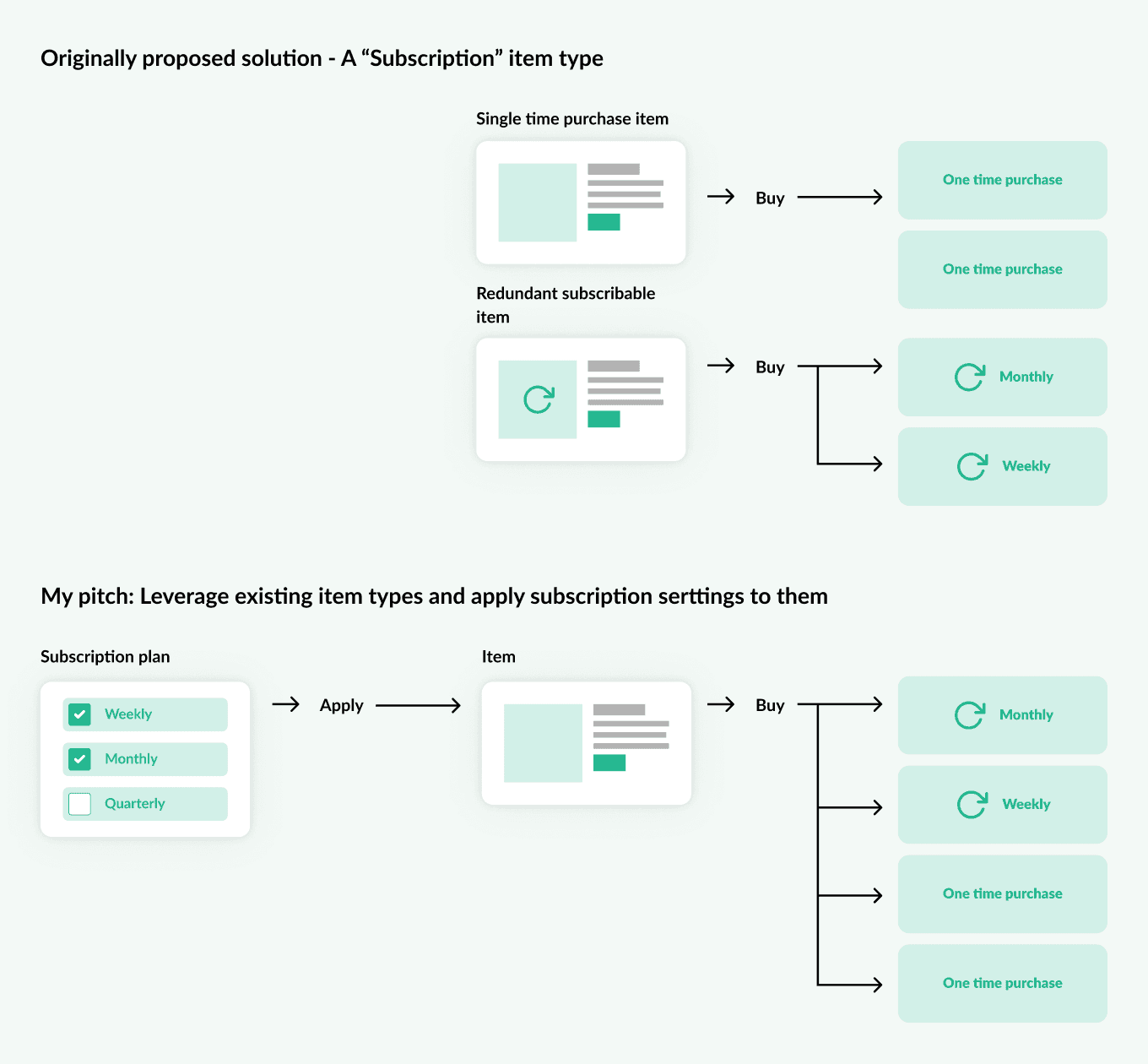
Problem 1: Manual Effort for Sellers
Issue: Sellers had to manually set up each individual subscription, specifying cadence, discounts, and items, which was time-consuming and error-prone.
Solution: Proposed a "Subscription Plan" model where sellers could define subscription parameters once and apply them to existing items, streamlining the process.
Problem 2: Poor buyer experience
Issue: The original model didn't integrate well with buyer-initiated channels, leading to a poor user experience. This is because many sellers wanted to sell items on a subscription cadence as well as a a one-time purchase. This would require them having the same item twice in their online store which is confusing for their customers.
Solution: By applying subscription plans to existing items types, buyers could seamlessly subscribe to items as they’re already being sold across sales channels, ensuring a consistent experience.
Problem 3: Longterm technical debt
Issue: The original model didn't integrate well with buyer-initiated channels, leading to a poor user experience. This is because many sellers wanted to sell items on a subscription cadence as well as a a one-time purchase. This would require them having the same item twice in their online store which is confusing for their customers.
Solution: By applying subscription plans to existing items types, buyers could seamlessly subscribe to items as they’re already being sold across sales channels, ensuring a consistent experience.

Results and impact
As a result, Square shipped “Subscription plans” that can be applied to any existing item type that can already be sold on any sales channel. They can set parameters like cadences and discounts for subscribing and can apply it to multiple items at once. This also means if they want to change a subscription plan, they can simply update the plan instead of manually updating all subscription items. Part of this release included:
Improved efficiency for sellers: Reduced the time and effort required for sellers to set up subscriptions.
Enhanced buyer experience: Provided a seamless subscription process across all sales channels.
Reduced technical debt: Minimized the need for additional development by utilizing existing item structures.
Positive feedback from sellers and internally: Received acknowledgment from PMs and engineers for resolving long-standing conflicts and improving the overall user experience.